
Culture & curiosities · Family traditions
Family traditions: the gestures that connect generations
Yellowed recipe notebooks, Sunday tables, embroidered linens, photo albums and gardens with well-kept rituals: family traditions preserve a way of living with time that no one has managed to replace. Here are twelve chapters on these handed-down gestures, these objects that tell stories and these celebrations that shape a year — between memory, transmission and the joy of doing things together.
Cultural, evocative text. The photographs are generated illustrations.
Why traditions matter so much
A yellowed notebook full of recipes, a tablecloth saved for special occasions, a precise gesture learned without noticing just by watching: family traditions aren't grand ceremonies, they're small rituals repeated so often they become a second language. Sometimes we only notice them when we describe them to someone who has never seen them.
And admittedly, these customs never stop getting people talking: we defend them with a smile, adapt them to each generation, and cherish that special feeling of belonging to a long chain of gestures — an object received, a phrase recited, a table set the way it always has been.
Grandmother's recipe notebook
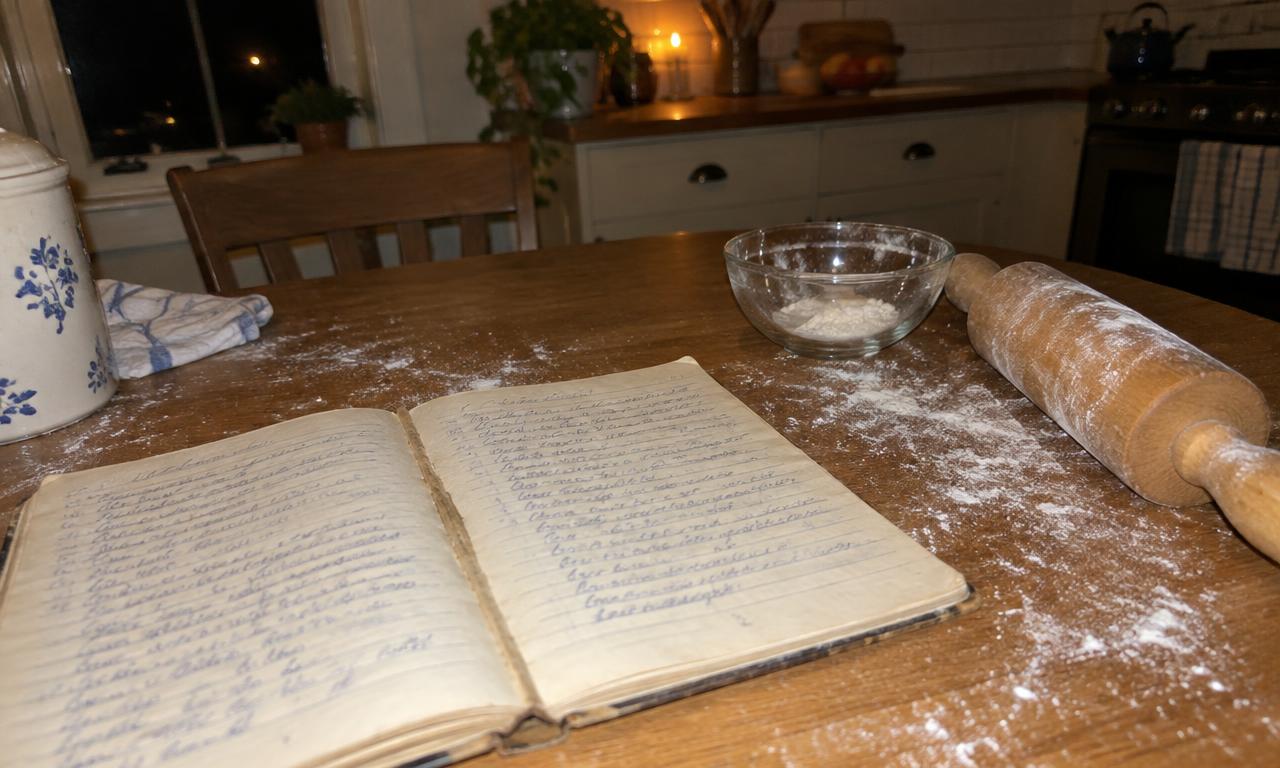
Almost every family has its notebook: a hand-bound school exercise book, flour-stained pages, handwriting that overlaps — the grandmother's, the mother's, a child's who wanted to give it a try. We open it looking for the Sunday cake recipe, but mostly we read years of shared meals.
The recipes are written in a syntax all their own: "a glass of flour", "bake until it looks right", "you know how". Younger generations, armed with precise scales, learn another language this way: that of proportions by feel, passed down by hand more than by text — which is why no cake ever turns out exactly the same.
The Sunday table
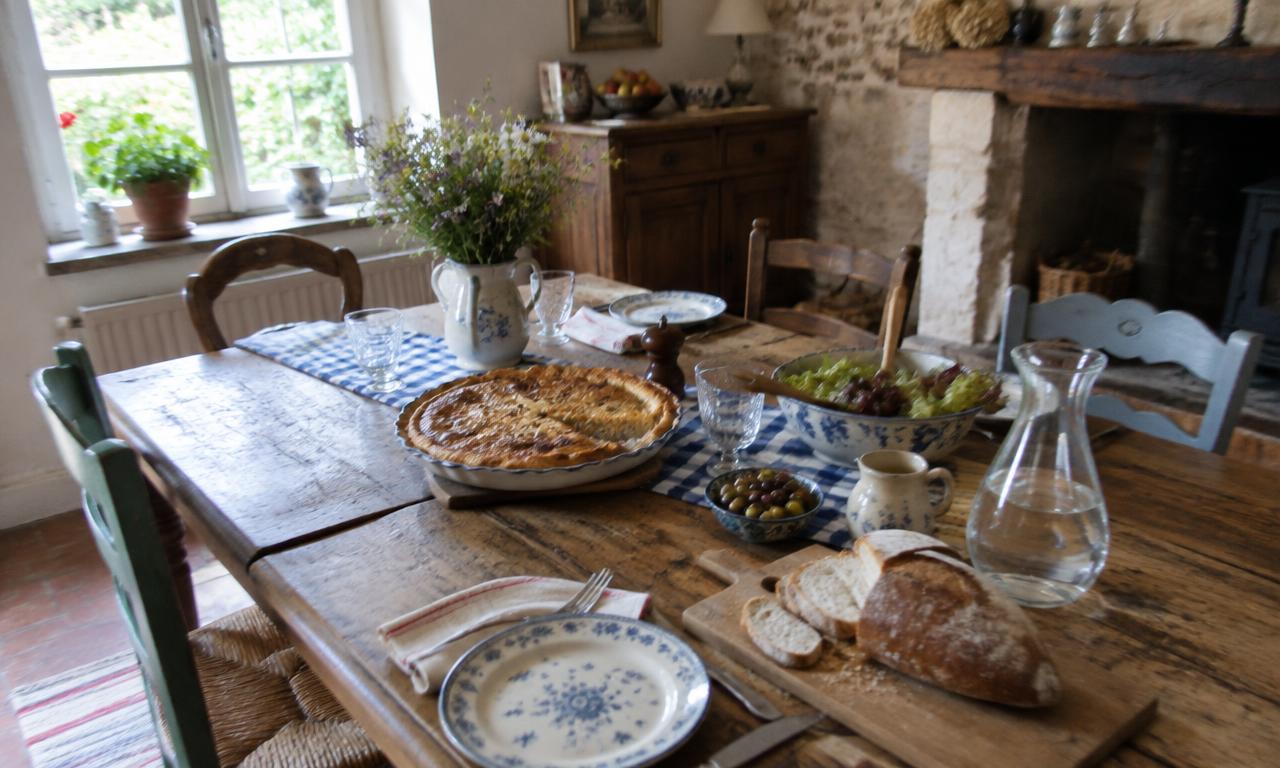
On Sundays, the table changes its face: the festive tablecloth leaves its drawer, the flowered plates replace the weekday ones, and the pastry takes center stage like a masterpiece. Nothing is explained — it's Sunday, and the table says so on its own.
Around it, the seats never change: grandfather at the head, the children grouped together, the one who has told the same stories for twenty years and whom nobody would ever change. The Sunday table is the family's oldest institution — and probably the one that least needs speeches.
The gestures that get passed down
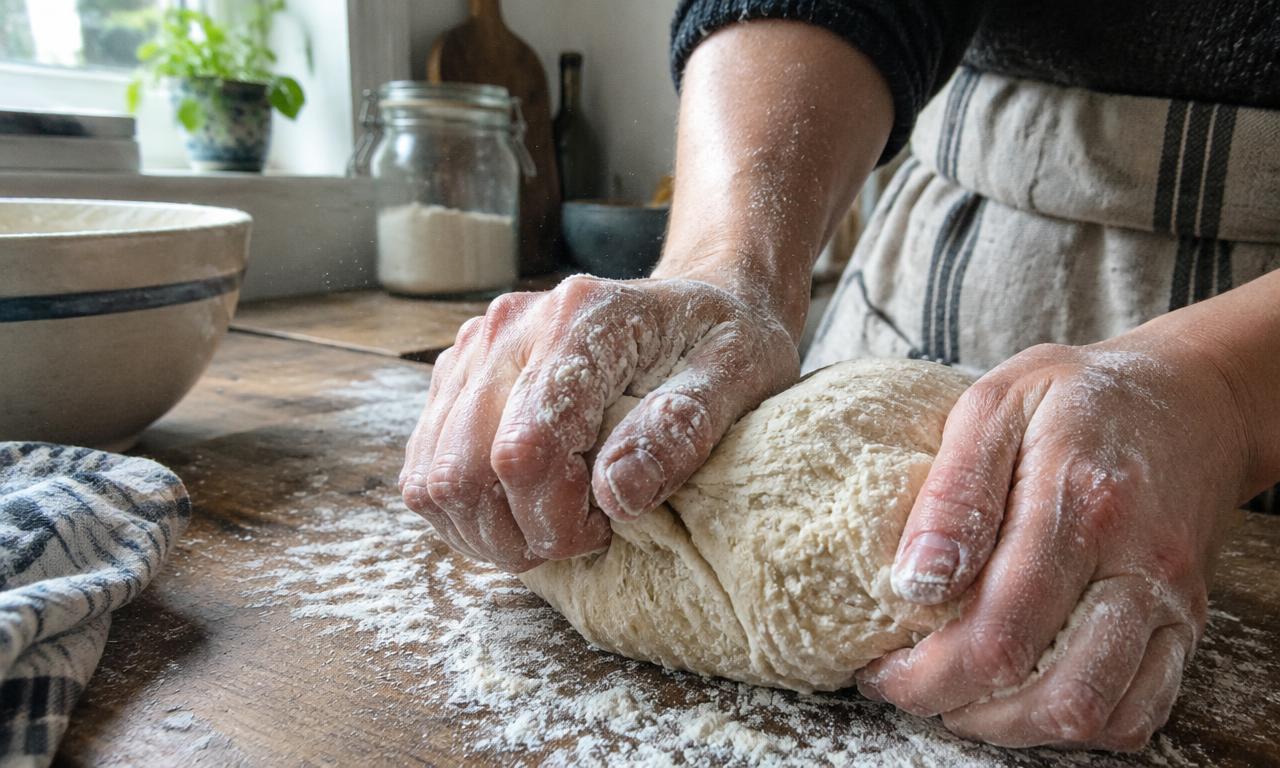
Some gestures are learned without lessons: the way to fold the edges of a pie, to recognize the smell of a sauce that's ready, to fill a tin without measuring. We watch them for years, then one day we do them without remembering — and realize we got them from a parent, like an ember passed from hand to hand.
The elders teach them with few words: "like this, you see", and a look that corrects better than any demonstration. This knowledge of cooking, sewing or tinkering isn't really written down — it's shown, repeated, and it lasts in a family far longer than any how-to book.
The trousseau and household linens
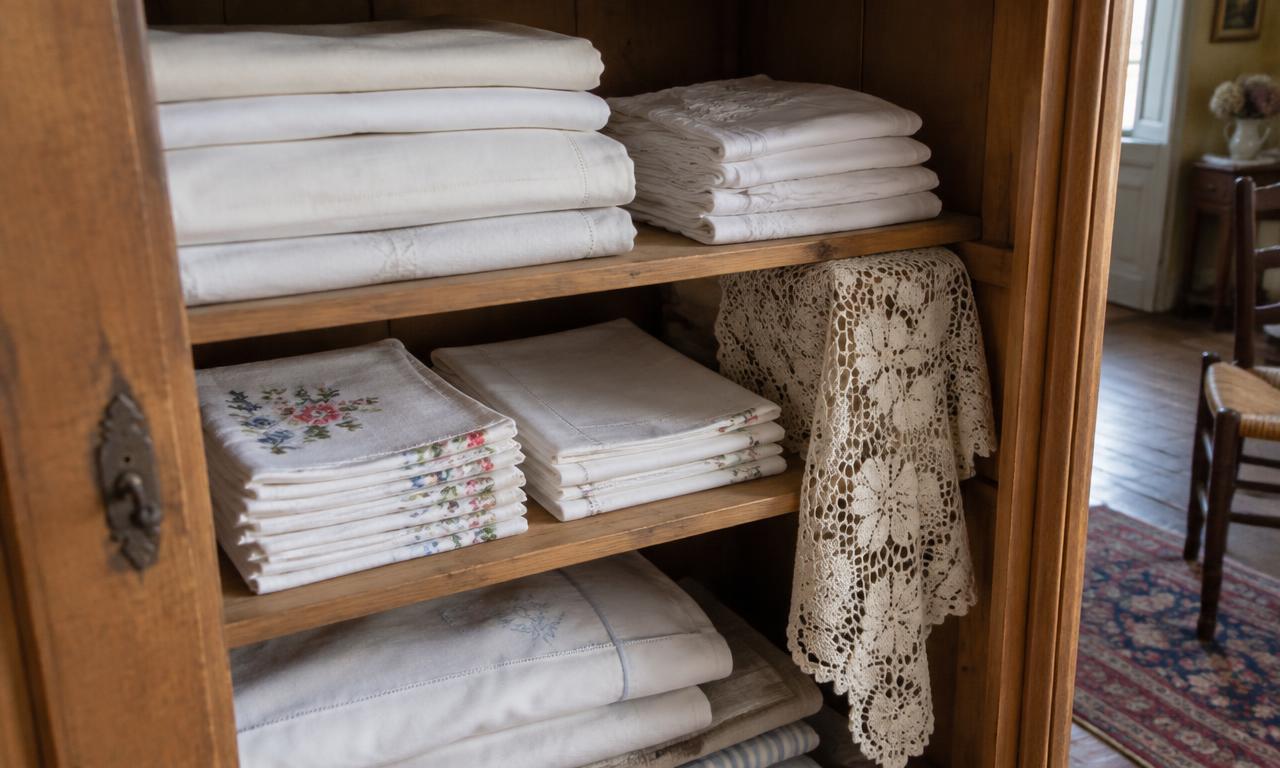
Family homes all have their linen cupboard: hand-hemmed sheets, napkins embroidered with initials, a lace tablecloth that comes out only twice a year. This trousseau, sometimes started a generation earlier, tells of a patient idea of time — you embroider for meals that don't yet have a date.
We use it today the way it was used yesterday: the Christmas tablecloth is always unfolded the same way, the guest sheets wait for important visitors, and grandmother's lace, however fragile, is still washed by hand. Every fold has its place, every piece its story — and that's exactly what nobody dares to arrange differently.
The photo album sleeping on the shelf
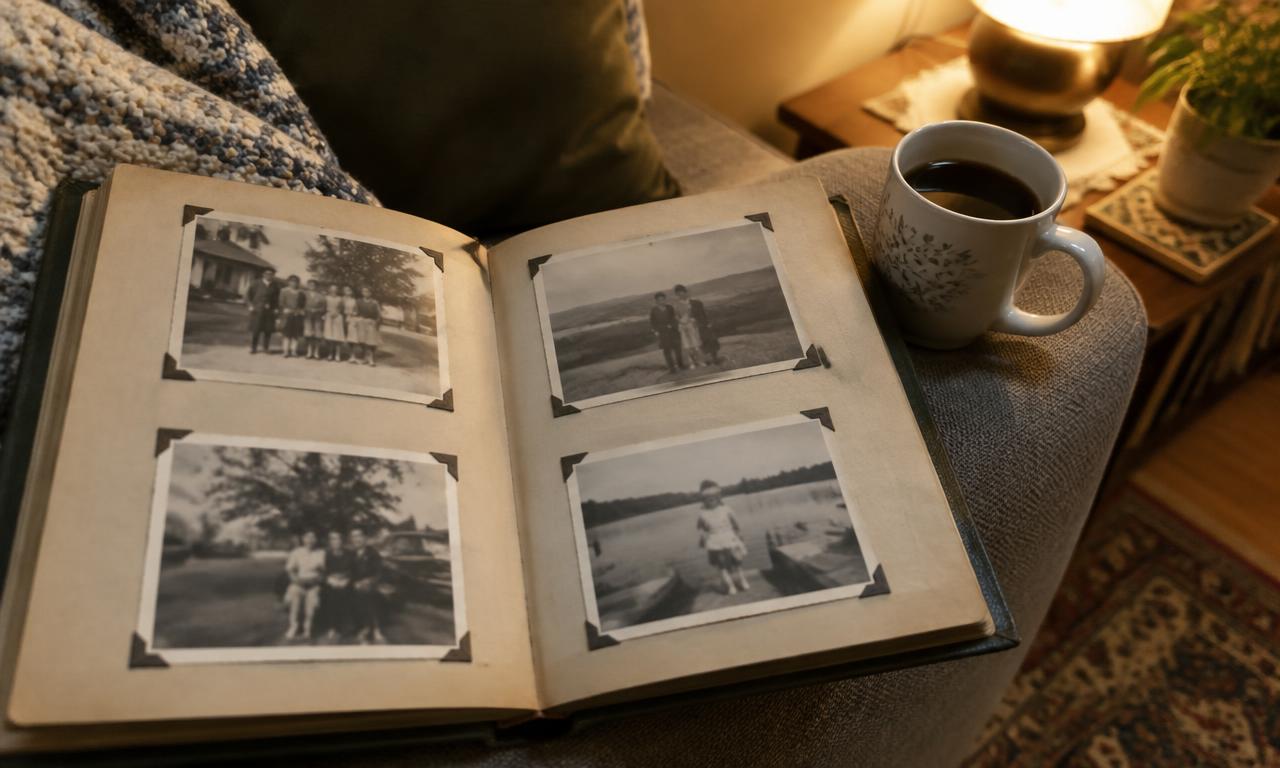
The family photo album is a disarmingly simple time machine: you open it to check a date and come out an hour later with the entire family tree. Black-and-white photographs, cardboard corners, captions in faded ink — everything invites you to slow down.
Every family has its iconic photo: the farm woman in front of her house, the boy leaving for the factory, the stiff group in front of the church. We comment on them from memory, fill in the silences, and sometimes discover an unknown face that no one can name anymore — one more mystery that's part of the tradition.
Objects that tell stories
In every family home there are objects with a story: the clock that no longer keeps time but is wound every morning, grandfather's coffee pot, the silverware brought out "when someone comes". They're worth nothing at the market and everything at home — you don't lend them, you don't replace them.
These objects work like evidence: they bear witness to past meals, sleepless nights, moves where everything was left behind except them. The day they pass to the next generation, the emotion is always the same — an old object enters a new hand, and the story begins another cycle.
Holiday cooking
Alongside everyday recipes, every family keeps its holiday cooking: the dish prepared the day before, the secrets revealed only to the next cook, the dessert whose recipe, however much people insist, has never been written down exactly. The end-of-year holidays are its most visible stage.
The same scenes come back year after year: the kitchen too small for so many people, the children sneaking bites, the signature dish carried to the table to a ritual ovation. Holiday cooking isn't the family's best cooking — but it's the one every other kitchen is measured against.
The garden and its rituals
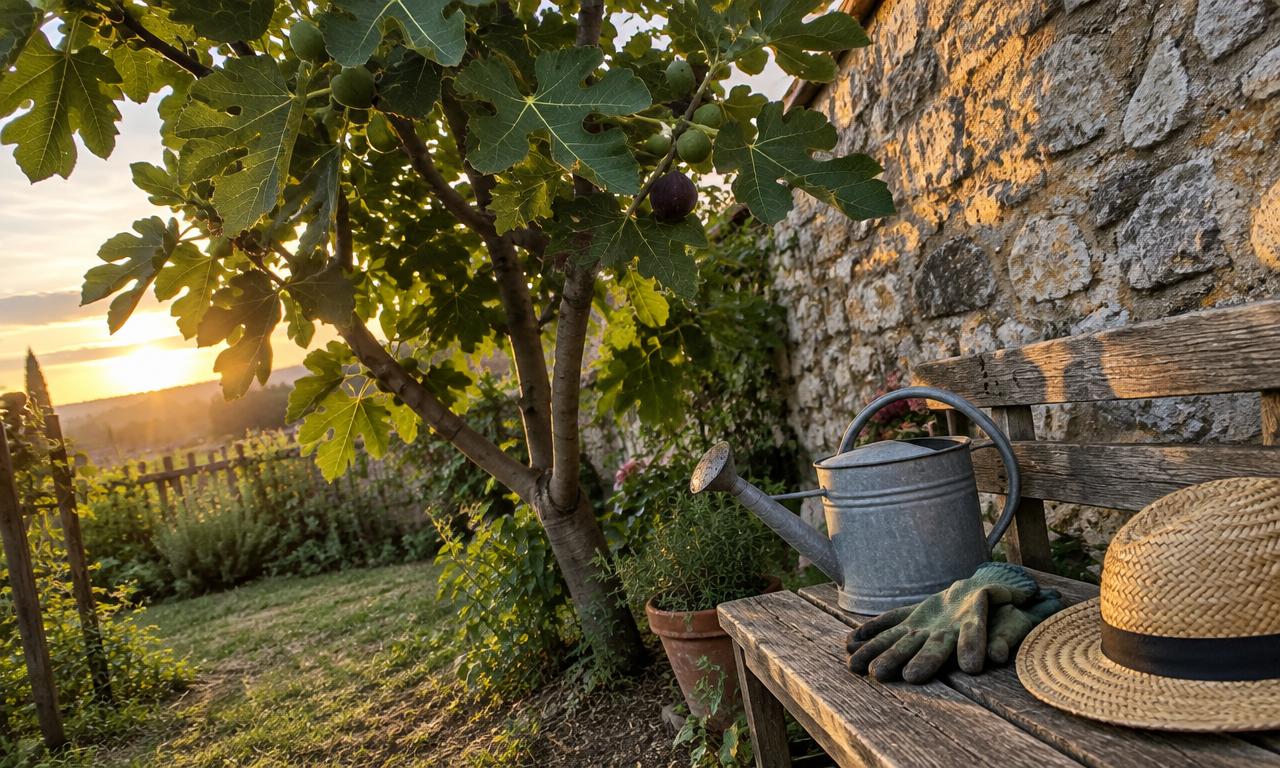
The garden is a tradition in itself: the fig tree planted for a birthday, the walls that hold the warmth, the evening gestures repeated without a calendar — watering, cutting a branch, slipping a harvest into the apron. People work there speaking softly, as in an open-air church.
Every family garden has its handed-down ritual: pruning in spring, preserving in autumn, giving figs to the neighbors and keeping the best ones. Those who leave never fully cut ties — they take a cutting, a seed, a jar of jam, and the family garden begins again somewhere else.
Bedtime stories
There are families who tell stories, and those who listen: the ancestor who overcame hardship, the home village, grandfather's joke that everyone wants to hear again. Bedtime stories are the household's oral library — never written, never identical, never entirely false.
Children who grow up with them end up telling them in turn, often believing they're making things up, and discover one evening that they're repeating the same details in the same order. That's how traditions work: a story repeated until it becomes a date, a dish, a phrase the whole house finishes together.
The celebrations that shape the year
Traditions draw a calendar unique to each home: pancake day, the village fair, the ever-popular birthday dinner, canning season. Nothing monumental — modest milestones that keep a year from being a string of identical days.
We return to them the way we return to a familiar road: looking forward to them, sticking to them, bringing newcomers along. And when a date goes missing — a departure, a loss, a move — the whole year loses its bearings, and the whole family pitches in to stitch the calendar back together before winter.
Creating new traditions
Traditions aren't only an inheritance: they're still being made. A dish you decide to cook every Sunday, a birthday walk, an album started for the next generation — three repetitions are enough for a gesture to become a rule, and one generation for it to become a rite.
The advice of happy families always comes back to the same thing: choose few, but truly choose them. One or two customs kept faithfully do more than a calendar full of obligations. Because a family tradition, deep down, isn't what you preserve — it's what you continue.
In short
From flour-stained notebooks to festive tablecloths, from black-and-white albums to evening gardens, family traditions remain what they have always been: a way of doing things together, the way it's done at home. They promise nothing extraordinary, but they offer a charming excuse to open a recipe notebook, unfold a festive tablecloth — and sometimes to recognize, in a gesture of your own hand, that of a hand that came before. Your next family tradition may already be taking shape around your table.